What Ray Kroc’s story can teach us about income, ownership, and building something that can continue producing when we cannot.
Picture a man climbing out of his car in a parking lot in San Bernardino, California. It is 1954. He is fifty-two years old.
His health is not particularly good. His finances are under pressure. He has spent decades selling everything from paper cups to milkshake mixers, and his current business is struggling.
This does not look like the beginning of his biggest chapter.
But one customer has caught his attention.
A small hamburger stand in San Bernardino has ordered eight of his five-spindle Multimixers—enough to make forty shakes at once. Ray Kroc wants to know what kind of restaurant needs that much capacity, so he drives out to see it for himself.
The stand belongs to brothers Dick and Mac McDonald.
Ray watches their system move with remarkable speed. Customers order, receive their food, and move on in a fraction of the time he is accustomed to seeing at other drive-ins.
What he sees is not simply a successful hamburger stand.
He sees a system that might be repeated.
The Opportunity Was Bigger Than the Hamburger
Ray eventually persuaded the McDonald brothers to let him franchise their system.
The opportunity was exciting.
The economics were not.
By 1959, McDonald’s had opened its hundredth restaurant, but Ray was still struggling to make the business model work. Franchise fees were thin, and growth alone was not solving the problem.
Then Harry Sonneborn, a finance executive, showed Ray another way to think about the company.
McDonald’s did not have to participate only in the restaurant business.
It could participate in the real estate beneath the restaurants.
The model was straightforward: acquire control of real estate at strong locations and lease it to franchisees. The franchisee operated the restaurant. McDonald’s collected rent along with its other franchise-related revenue.
That changed something fundamental.
The hamburger had not changed.
The source and structure of the company’s income had.
McDonald’s now had an asset base and recurring lease income that could help support future growth.
What ultimately changed the economics of the company was not simply a better hamburger.
It was ownership.
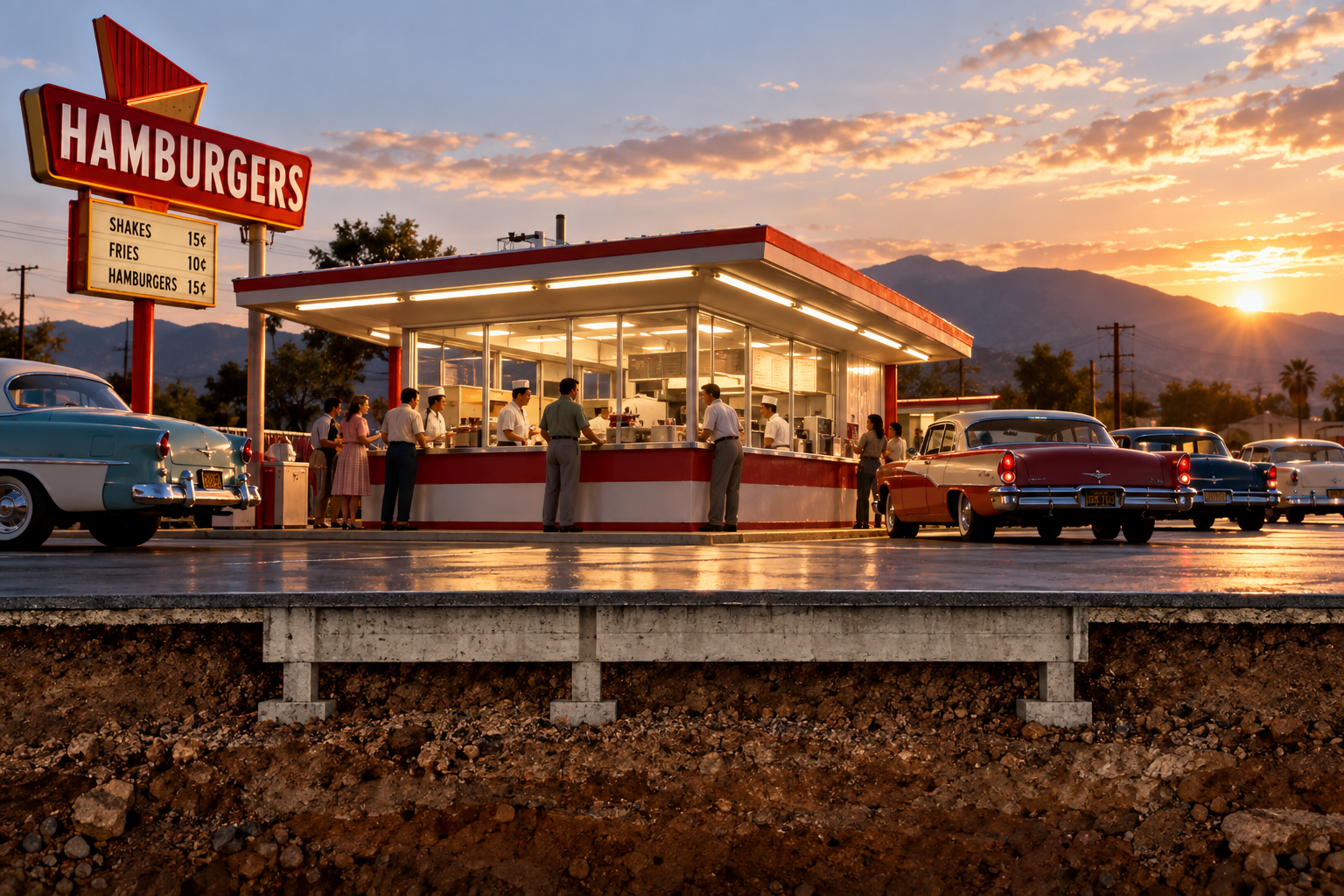
Storefront or Ground?
Think about a storefront.
It needs people behind the counter. Product has to be delivered. Employees have to be hired. Customers have to be served.
If everyone stops showing up, eventually the business stops producing.
Now think about the property beneath that business.
The sign can change.
The operator can change.
But ownership of a well-located productive asset can continue to have value and generate income beyond the labor of any one person.
That is the distinction I find so important.
The question is not literally storefront or land.
The question is:
Am I building only income that depends on me showing up—or am I also building ownership in assets that can continue producing when I am not there?
That is a very different way to think about wealth.
I Learned a Version of This Much Earlier
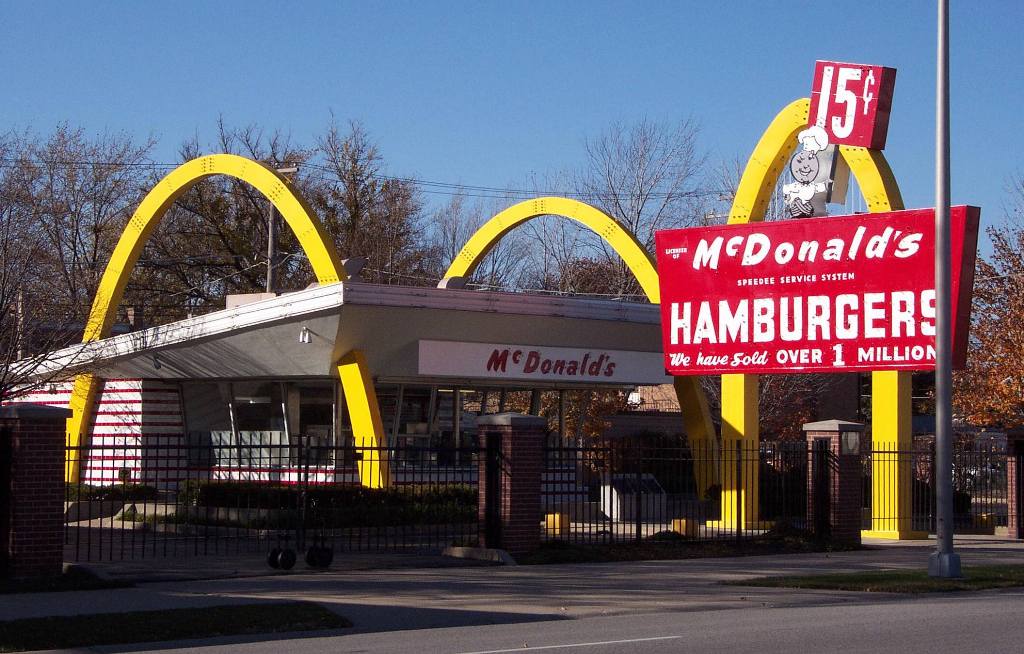
My first job, at fifteen, was on the burger line at the oldest McDonald’s in Winston-Salem.
Some nights I would clean every piece of equipment and call my dad at 3:15 in the morning for a ride home.
He was not quite as enthusiastic about that schedule as I was.
God bless my dad—a patient father of four and a truly great man.
Years later, the lesson behind Ray Kroc’s story resonated with me for another reason.
My parents were in ministry, and so was I for a season. We never had much money for stocks, but sometimes we could scrape together a down payment on a rental property.
Over time, renters helped pay down the mortgage.
Eventually, we owned property free and clear.
That was my first real lesson in income that did not depend entirely on the hours I personally worked.
Later, as a passive investor, I discovered that I could participate in professionally managed real estate without being the person handling every repair, resident call, or property-management decision.
The work did not disappear.
My role changed.
That distinction became part of the thinking behind my book, Earn More and Worry Less.
Passive Does Not Mean Nobody Works
This is an important point.
Passive investing does not mean nobody is doing the work.
Operators and property managers still have to manage the property, maintain the community, work with residents, control expenses, oversee renovations, manage financing, and execute the business plan.
The investor simply has a different role.
Investors provide capital and participate in the results.
That does not remove risk.
It makes diligence part of the investor’s job.
You still need to understand the deal, the operator, the market, the financing, the assumptions, and the reserves.
The goal is not “no work.”
The goal is to separate at least some of your income from your constant physical presence.
Why Multifamily Real Estate?
For me, one answer has been professionally managed multifamily real estate.
Not because apartments are magic.
And certainly not because they are risk-free.
Housing meets an enduring human need, and a professionally managed apartment community can generate recurring rental income without requiring every investor to operate the property personally.
But there is another part of this that matters to me.
Every unit on a spreadsheet is also someone’s home.
A nurse may be coming home from a double shift.
A young family may be saving for their first house.
A retiree may simply want a safe and comfortable community.
Good ownership therefore has responsibilities as well as potential returns.
That is one reason I believe evaluating the operator matters so much.
What Is the Freedom For?
Once you begin separating income from your constant physical labor, another question follows.
What do you want that freedom to make possible?
For Ray and Joan Kroc, wealth eventually supported philanthropy on an extraordinary scale.
After Ray died, Joan became a major philanthropist in her own right. Her giving ultimately supported public radio, The Salvation Army, and communities around the country.
The point is not that Ray Kroc envisioned every eventual use of that wealth while standing in a hamburger-stand parking lot in 1954.
He did not.
The point is that he helped build an enterprise capable of creating value beyond his own daily labor.
Joan later used that capacity in ways that reached people they would never meet.
That is the bridge between financial freedom and impact.
Recurring income does not automatically create purpose.
But it can expand what you are able to do with the purposes you already have.
Financial Strategy Can Serve Stewardship
So for me, the important question is not simply:
How much can I accumulate?
It is:
What could greater financial capacity make possible?
More time with family.
More freedom to serve.
More ability to give.
More room to take on work that matters, even when that work pays less.
That is where financial strategy can serve stewardship.
The money is not the purpose.
It can give you choices about where your time, energy, and resources go.
You Do Not Have to Build McDonald’s
Ray Kroc was fifty-two when he first visited the McDonald brothers’ restaurant.
He could not see the entire road ahead of him from that parking lot.
He recognized an opportunity, kept moving, and eventually learned a business model that reduced the dependence of the company’s income on his own labor.
You do not have to reproduce Ray Kroc’s outcome.
You do not have to build McDonald’s.
You do not even have to buy land.
But you can ask yourself whether all of your income will always depend on you showing up.
The first step does not have to be dramatic.
It may simply be learning how passive investing works, understanding the risks, deciding what role ownership could play in your financial life, and taking action only when an opportunity fits your goals and circumstances.
I will leave you with two questions.
What do you want greater freedom of time and resources to make possible in your life—and beyond it?
And:
Are you building only income that requires your continued presence, or are you also building ownership that can continue producing when you step away?
My hope is that whatever you choose to build gives you more than income.
I hope it gives you greater freedom to be present for the people you love, support the causes that matter to you, and create value that can continue beyond your own labor.
That, to me, is the real lesson of the land beneath the griddle.
If professionally managed multifamily real estate is something you want to understand better, ask me for the Passive Income Playbook. It explains how I think about passive investing, the role of the operator, and the questions an investor should ask before deciding whether a deal fits. If it makes sense for you, my team and I would be glad to continue the conversation.