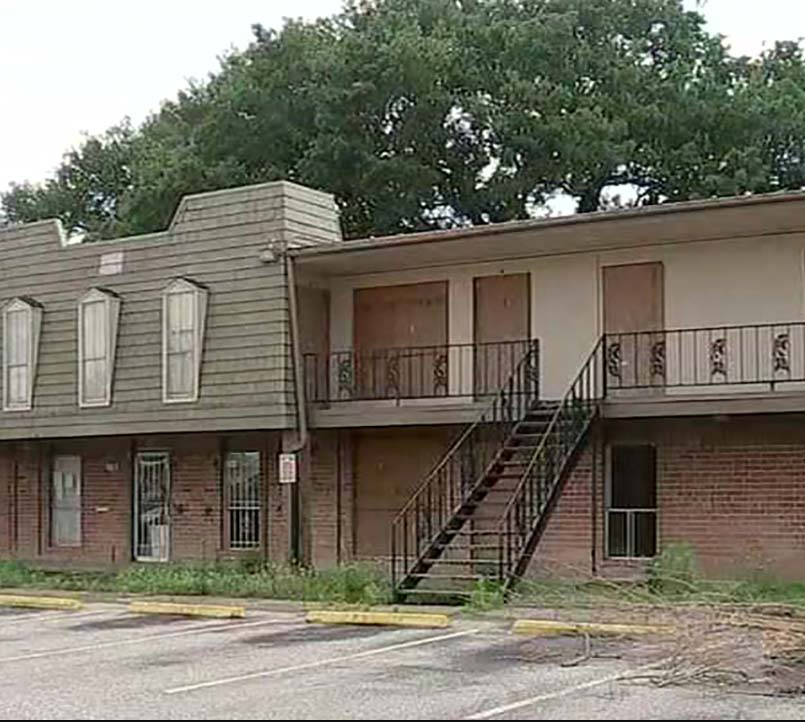
The best opportunities aren’t always the ones that look the best. Sometimes they’re the ones you understand better than everyone else.
Over the past few weeks, I’ve shared several stories from growing up.
Fixing homes alongside my father.
Learning about foundations and construction from my uncle, who was a mason.
Watching my parents take a moisture-ridden lake cabin that needed plenty of work and slowly turn it into a place our family actually wanted to spend time.
At the time, none of those experiences felt like lessons in investing.
They were simply part of life.
We weren’t sitting around the dinner table discussing value-add strategies or analyzing investment returns.
When something was broken, we figured out whether it could be fixed.
When something needed work, we did the work.
And when we didn’t have much money to throw at a problem, we became resourceful.
Looking back, though, I can see that those experiences were teaching me something much more valuable than how to repair a house.
They were teaching me how to evaluate potential.
And there’s a big difference between seeing potential and simply being optimistic.
The Question Most People Ask
When we encounter something that isn’t working, our natural instinct is to ask:
“What’s wrong with it?”
That’s a perfectly reasonable question.
In real estate, it’s an essential one.
What’s wrong with the roof?
What’s wrong with the plumbing?
Why is occupancy lower than comparable properties?
Why are expenses higher?
Why aren’t residents renewing?
Why hasn’t the property performed the way ownership expected?
But over time, I’ve realized that identifying the problem is only the beginning.
The more useful question is:
“What’s wrong with this—and is it actually fixable?”
And then comes an even more important question:
“Who is going to fix it?”
Those questions sound simple.
But they’re at the heart of how I think about opportunity.
Not Every Problem is an Opportunity
One of the mistakes investors can make is assuming that because something is distressed, it’s automatically undervalued. It isn’t. Sometimes a bad property is simply a bad property.
A fundamentally poor location doesn’t suddenly become attractive because you renovate the kitchens. A market without sufficient demand can’t necessarily be rescued by better marketing. A business plan that only works under perfect assumptions probably isn’t much of a business plan. And a property requiring more capital than the potential upside can justify isn’t an opportunity just because the purchase price looks cheap.
Sometimes the correct decision is to walk away.
Knowing what not to buy is every bit as important as knowing what to buy.
But there’s another category of opportunity I’ve always found interesting. It’s something that has real problems—but solvable ones. Maybe the property is poorly managed or maybe maintenance has been deferred. Maybe the units are dated. Maybe expenses aren’t being controlled effectively. Maybe residents aren’t receiving the level of service they should. Maybe the previous owner didn’t have the capital, team, time, or desire to execute the improvements the property needed.
Those aren’t imaginary problems.
They’re very real.
But they’re also different from permanent problems and that distinction matters.
That’s Where Value Can Hide
Think about two apartment communities sitting a mile apart. One is beautifully maintained, professionally operated, highly occupied, and performing near its potential.
The other looks tired. Its units haven’t been updated. The landscaping needs attention. Maintenance requests take too long. Residents aren’t particularly enthusiastic about staying. Expenses are higher than they should be.
The first property may be the better property today. But that doesn’t automatically make it the better investment.
The second property might contain something the first one doesn’t: A meaningful gap between current performance and potential performance. That’s the gap I’m interested in. Because value-add investing isn’t really about buying ugly properties. It’s about finding fixable gaps.
The opportunity exists when you can understand why that gap exists, determine what it will cost to close it, and build a realistic plan for doing so.
That’s very different from simply saying:
“We think we can raise rents.”
The Spreadsheet isn’t the Strategy
Anyone can build an attractive spreadsheet. You can make projected returns look very compelling by changing a few assumptions.
Assume rents grow a little faster.
Assume renovations cost a little less.
Assume occupancy improves sooner.
Assume the exit valuation is a little more favorable.
Suddenly, an average opportunity can look exceptional.
But the property doesn’t know what the spreadsheet says.
The market doesn’t care what the spreadsheet says.
Residents don’t care what the spreadsheet says.
Execution determines whether those assumptions ever become reality.
That’s why I want to understand the story behind the numbers.
If you’re projecting higher rents, why?
What comparable properties support that assumption?
If you’re projecting lower expenses, which expenses specifically?
If renovations are expected to improve the resident experience, what exactly are residents receiving for that investment?
If occupancy is expected to increase, what’s preventing the property from achieving higher occupancy today?
The more specific the answers become, the more useful the analysis becomes.
A Framework I’ve Carried with me for Decades
The terminology has changed since I was a kid working on houses.
The scale has certainly changed.
But the basic thought process hasn’t.
When I’m evaluating an opportunity, I keep coming back to four questions.
1. What’s actually wrong here?
Before thinking about upside, understand the problem.
Is it physical?
Operational?
Financial?
Management-related?
Market-driven?
Or some combination of those things?
A dated apartment can be renovated.
A poorly managed property can potentially be operated better.
A broken process can be redesigned.
But certain market conditions are much harder to change.
Correctly diagnosing the problem comes before trying to solve it.
2. Is the problem actually fixable?
This is where optimism has to give way to evidence.
If the property needs renovations, can they realistically be completed at the projected cost?
If rents are below market, is there real evidence residents will pay more after improvements?
If expenses are too high, which ones can actually be reduced?
If management is the problem, what specifically will a new management team do differently?
“There’s upside” isn’t enough.
I want to understand where the upside comes from.
3. What will it cost to close the gap?
Every improvement requires something.
Capital.
Time.
Expertise.
People.
Usually all four.
And one of the easiest ways to make a mediocre investment look attractive is to underestimate what improvement will actually require.
The question isn’t merely whether something can be fixed.
It’s whether fixing it makes economic sense.
If you spend a dollar improving something, what reasonable value can that dollar create?
And how much room exists if the plan costs more or takes longer than expected?
That’s where discipline matters.
4. What happens if we’re wrong?
This may be the most important question of all.
And it’s often the least exciting one to discuss.
What happens if renovations cost more?
What happens if rents don’t increase as quickly?
What happens if occupancy takes longer to stabilize?
What happens if insurance or taxes rise?
What happens if the market softens during the hold period?
I don’t believe good underwriting means predicting everything correctly.
Nobody can.
I believe good underwriting means acknowledging that you won’t predict everything correctly and building enough margin into the plan to survive being wrong.
That is a very different mindset.
This Matters Even More for Passive Investors
When you’re investing passively, you’re trusting someone else to make these decisions.
You’re not choosing the flooring.
You’re not supervising contractors.
You’re not handling resident issues.
You’re not negotiating every vendor contract.
You’re not monitoring the property every morning.
That’s part of the value of passive investing.
You can participate in the potential benefits of multifamily ownership without turning property operations into your second career.
But that makes operator selection incredibly important.
Because ultimately, you’re not only investing in a building.
You’re investing in someone’s ability to correctly diagnose problems and execute solutions.
I think that’s one of the most overlooked aspects of passive real estate investing.
Investors naturally spend a lot of time looking at projected returns.
I understand why.
Returns matter.
But projections tell you what the operator believes could happen.
The quality of the team tells you something about whether there’s a credible path to making it happen.
That’s why I believe investors should spend as much time evaluating the people and assumptions behind a business plan as they do looking at the headline numbers.
Seeing Potential is not Optimism
This distinction matters to me.
I’m optimistic by nature.
But optimism alone is a terrible investment strategy.
Seeing potential doesn’t mean believing everything can be fixed.
It means developing a disciplined way of separating three categories:
What’s already working.
What’s broken but fixable.
What’s broken and should be left alone.
The third category may be the most important.
Because experienced investors aren’t simply better at finding opportunities.
Over time, they should also become better at recognizing situations where the potential upside doesn’t adequately compensate for the risk.
Walking away is part of investing.
Sometimes the best investment you make is the one you don’t make.
From Fixing Houses to Evaluating Investments
I didn’t learn any of this from a textbook.
I learned the earliest version of it standing in houses that needed work.
Next to my father.
Next to my uncle.
Watching my parents bring that lake cabin back to life.
I watched people look at something imperfect and ask:
“Can we make this better?”
Sometimes the answer was yes.
And if it was yes, the next question became:
“What will it actually take?”
Those two questions have stayed with me.
Later, as I began buying and renovating properties myself, the numbers became larger and the decisions became more complex.
Eventually, the questions expanded beyond physical repairs into operations, financing, property management, resident experience, market selection, and risk.
But underneath all of that, the instinct remained remarkably similar.
Understand what you’re looking at.
Separate permanent problems from temporary ones.
Determine what can realistically be improved.
Understand what improvement will cost.
And never forget to ask what happens if you’re wrong.
Beyond Returns
That’s one reason I’ve spent these first few editions sharing stories rather than immediately jumping into investment mechanics.
Because before there was a strategy, there was a way of looking at things.
Before there were multifamily properties, underwriting models, market analysis, or investment structures, there were houses that needed work.
There were problems that had to be understood.
There were limited resources.
And there were people around me who taught me that something being imperfect didn’t automatically mean it wasn’t valuable.
That’s the foundation I’ll keep returning to as Beyond Returns moves into conversations about multifamily investing, passive ownership, evaluating operators, risk, taxes, and long-term wealth.
Because investing isn’t simply about finding the highest projected return.
It’s about understanding what creates the return.
It’s understanding the asset.
Understanding the risks.
Understanding the people executing the plan.
And determining whether the gap between what something is today and what it could reasonably become is worth pursuing.
That’s what I mean when I talk about learning to see what others walk past.
It isn’t about being the person willing to buy what nobody else wants.
It’s about becoming the person who understands why nobody else wants it—and whether they’re right.
There is a big difference.
And sometimes, that’s where the opportunity lives.
I’m curious: When you evaluate an opportunity—real estate or otherwise—what’s the first question you ask yourself?
I’d enjoy hearing how you think about it.
— Dave
Beyond Returns is provided for educational and informational purposes only. Nothing shared should be considered investment, legal, accounting, or tax advice, nor an offer to sell or solicitation to purchase securities. Real estate investments involve risk, including the potential loss of principal, and individual circumstances vary. Any examples discussed are illustrative and are not guarantees of future results. Consult your own qualified legal, tax, accounting, and investment professionals before making investment decisions.