A few percentage points may not look dramatic in a single year.
Over decades, compounding can make the difference enormous.
In this short CNBC interview, Tony Robbins discusses an example from The Holy Grail of Investing, comparing the historical performance he cites for private equity with the S&P 500.
Robbins points to a historical comparison of approximately 14.2% annually for private equity versus 9.2% for the S&P 500. This is not a comparison of multifamily real estate with stocks, nor is it a prediction of future returns. It is an interesting illustration of how seemingly modest differences in annual performance can compound over long periods of time.
The Power of Compounding
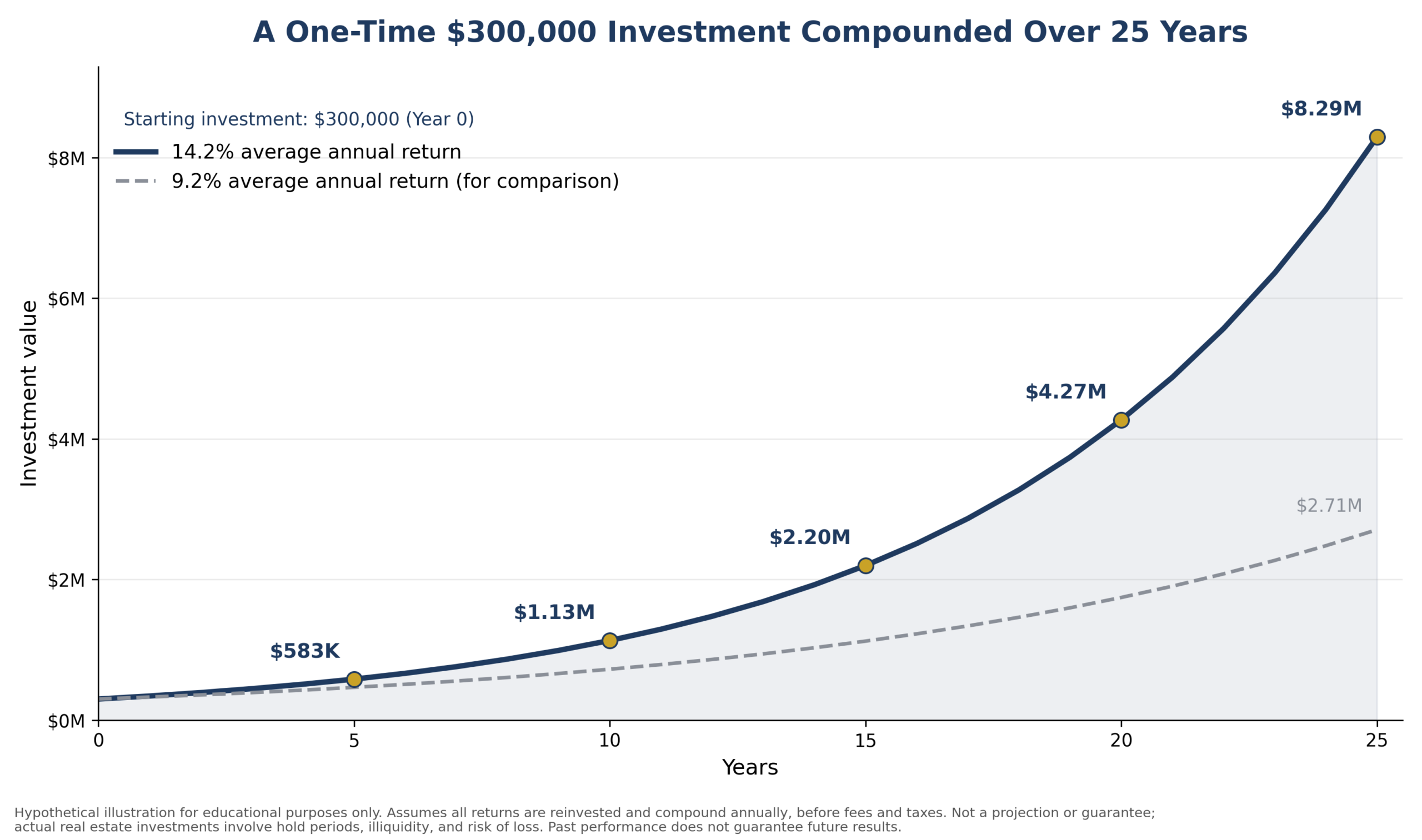
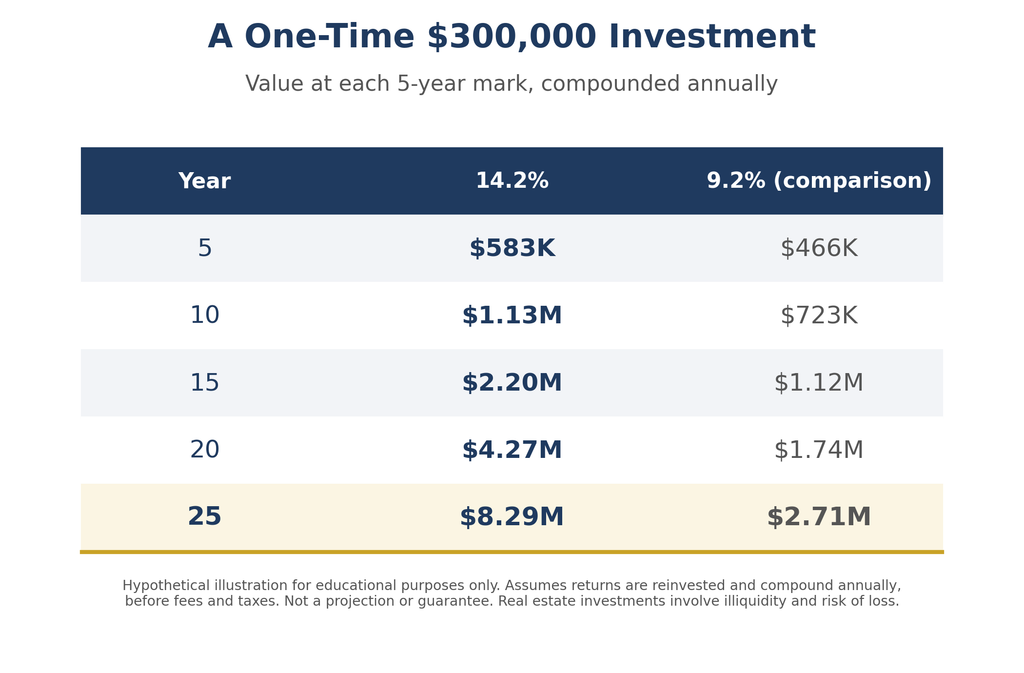
To visualize the difference, consider a hypothetical one-time investment of $300,000.
If $300,000 compounded annually at 14.2% for 25 years, it would grow to approximately $8.29 million.
At 9.2%, the same $300,000 would grow to approximately $2.71 million.
The point isn’t that an investor should expect either return.
It is that time magnifies differences in return.
That is one reason I believe investors should look beyond a headline percentage and think carefully about time horizon, risk, diversification, fees, taxes, liquidity, and the quality of the investment itself.
Compounding can be powerful.
But return is only one part of an investment decision.
Disclaimer
This illustration is hypothetical and is provided for educational and informational purposes only. It assumes annual compounding and reinvestment of returns and does not account for fees, taxes, distributions, timing of cash flows, or other investment expenses. The 14.2% and 9.2% figures referenced above relate to historical asset-class comparisons discussed by Tony Robbins and are not returns of Chateau Capital or any specific real estate investment. Past performance does not guarantee future results. Private equity, real estate, and other investments involve risk, including illiquidity and the possible loss of principal. Nothing presented here is investment, tax, legal, or accounting advice.